
Stewart County Criminal Court Cases
Stewart County splits criminal case work by jurisdiction and stage. General Sessions handles misdemeanors within its authority and the preliminary steps in felony matters. It may hold an initial appearance, address bond, and determine whether a felony case advances. Circuit Court is the felony trial court after indictment. Both criminal clerks are on the second floor of the Stewart County Courthouse at 225 Donelson Parkway in Dover, but each keeps the files for its own docket.
Municipal matters have separate homes. Dover City Court handles town ordinance, traffic, building, and code matters at 625 Donelson Parkway. Cumberland City Municipal Court is at 121 Main Street. Juvenile Court uses 112 Natcor Drive, and juvenile files are not a public criminal-history lookup. Calling the wrong office can produce a false dead end, so first identify whether the matter is a misdemeanor, preliminary felony, indicted felony, or municipal citation.
A 2022 AOC security survey documents two active court locations and two courtrooms. The courthouse rooms support Circuit, General Sessions, and Chancery work, while the Natcor Drive location can support Juvenile and overflow General Sessions or Chancery sessions. The survey confirms the court split, but it does not publish parking, entrance screening, accessibility procedures, or phone rules. Call the appropriate clerk for current visit details instead of assuming courthouse practices.
Note: Stewart County court location details should be confirmed with the responsible clerk before a visit because published security information is limited.
Two Stewart Criminal Case Clerks
The Stewart County two-clerk arrangement is easy to miss because both destinations share one floor. The Circuit Court Clerk accepts requests at P.O. Box 193, Dover, TN 37058, and at 931-232-7042. The General Sessions Clerk uses P.O. Box 398 and 931-232-8474. A requester should give the person's name and a case number when known, then ask for a specific docket, judgment, order, or filing.
The official clerk page also shows the public office that holds Stewart County felony trial records. The source view below provides a useful visual check before relying on an unofficial directory.
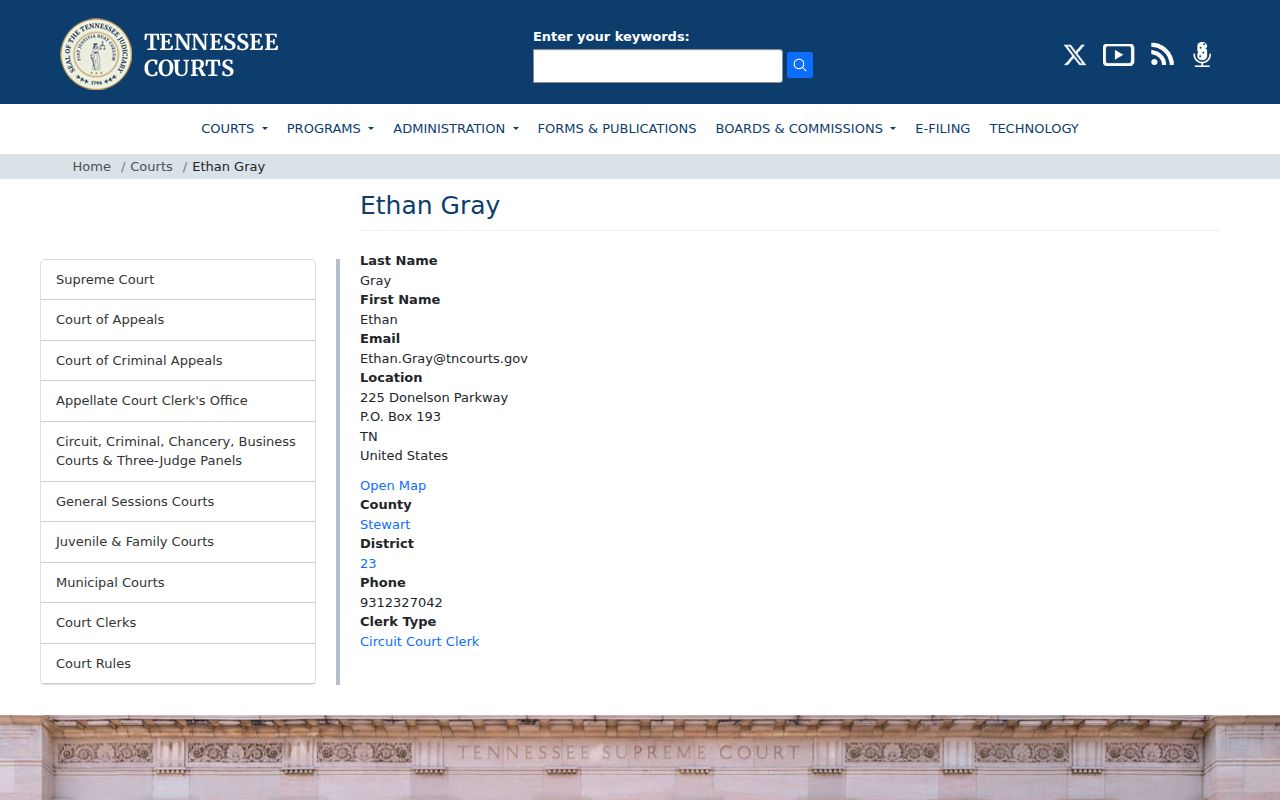
This clerk listing supports the direct court route when a Stewart County criminal case is not available through an online search.
Searching Stewart County Case Records
Tennessee does not provide a public statewide trial-court portal. A complete Stewart County case search therefore begins with a Stewart County clerk, not the appellate database. Use the stage of the charge to choose General Sessions or Circuit, and ask the clerk about a case that does not appear online. Inspection of an open record is generally free, but Stewart County has not published a current plain-copy, certified-copy, search, or per-page court fee schedule.
- Identify whether the matter is municipal, General Sessions, or Circuit, using the filed charge and case stage rather than the arrest label alone.
- Call the proper clerk and supply the party name, filing year, and local case number when available.
- Ask for the docket sheet first, then name the judgment, motion, order, or other filing needed.
- For an appealed matter, search Tennessee Public Case History and review its milestones and document tabs.
- Request inspection, a plain copy, or a certified copy from the custodian and ask for a cost estimate before copies are made.
Note: A blank appellate search does not establish that no Stewart County trial case exists; the local clerk remains the primary source.
Appellate Search, Not Trial Search
Tennessee Public Case History covers the Supreme Court, Court of Appeals, and Court of Criminal Appeals. It generally includes cases filed after September 1, 2006, and its data run through the prior business day. Documents such as motions, orders, judgments, and opinions may be downloadable for entries after August 26, 2013. None of that turns the service into a Stewart County trial docket.
The official Public Case History interface illustrates the actual scope and controls.
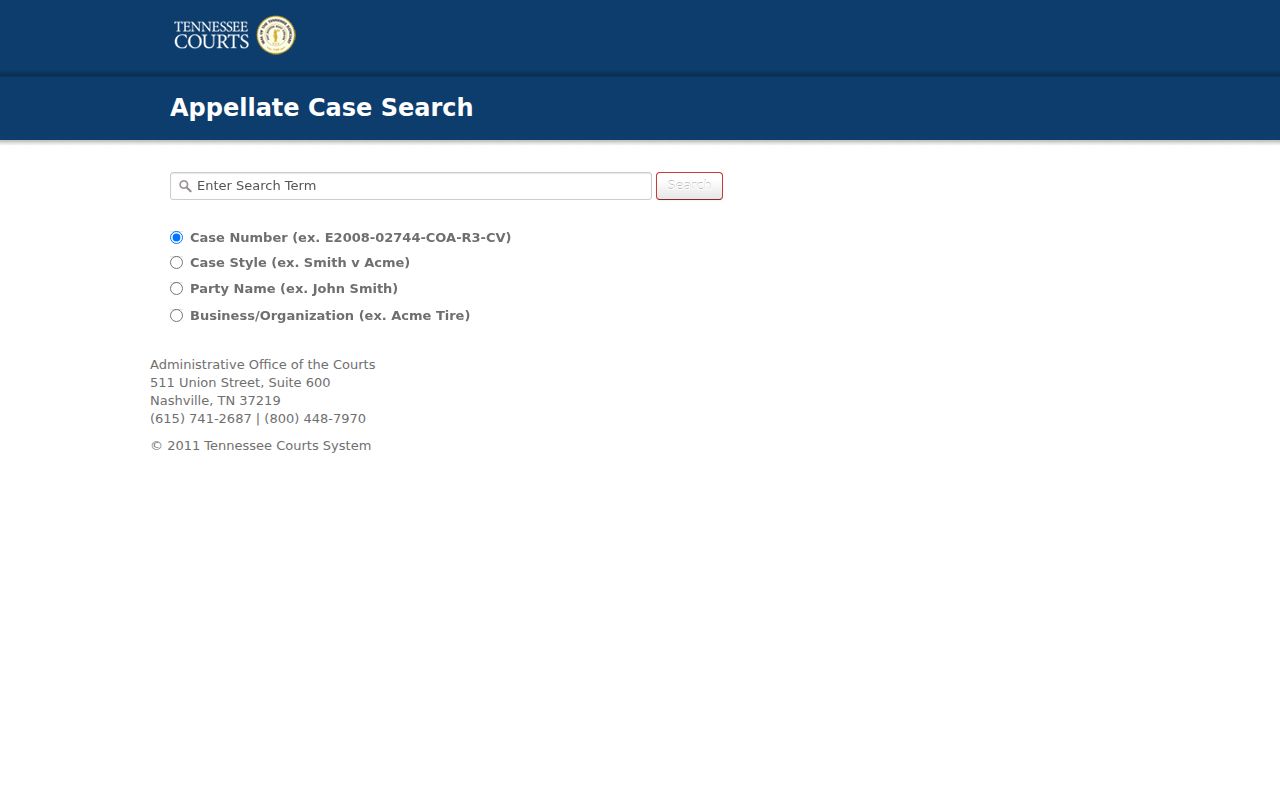
The search fields help locate a Stewart County appeal, while an unappealed misdemeanor or felony trial file still requires the appropriate Stewart County clerk.
| Field Label | Type | Required | Use |
|---|---|---|---|
| Case Number | Text | Unspecified | Full appellate format or sequence digits |
| Case Style | Text | Unspecified | Party-name style |
| Party Name | Text | Unspecified | First, last, or partial name |
| Business/Organization | Text | Unspecified | Entity party |
| Advanced Search | Control | No | Opens more search controls |
Inside a Stewart County Case File
A court case file is arranged around one prosecution, not one jail stay. It can preserve the charging instrument, the event-by-event docket, motions, hearing entries, plea or trial result, judgment, sentence, costs, and later orders. The local number may follow the documented form YYYY-CR-NNN. That format differs from an appellate number such as MYYYY-NNNNN-CCA-R3-CD, so copying the complete identifier prevents the clerk from chasing the wrong record.
| Case Number & Court | Identifies the Stewart County docket, filing year, and court with custody of the file. |
|---|---|
| Charging Document | Shows the complaint, warrant, or indictment allegations filed in court. |
| Docket Entries | Lists filed events, motions, hearings, and orders in sequence. |
| Hearing Dates | Records scheduled or completed court events, subject to current clerk confirmation. |
| Disposition & Judgment | States the court outcome, such as dismissal, acquittal, plea, or verdict when entered. |
| Sentence & Conditions | Sets out punishment and court-ordered terms when a conviction results. |
An appellate opinion can add legal issues, cited authority, analysis, and the appellate outcome. It does not replace the local bond record, cost ledger, warrant check, or next-hearing information.
Several terms help when reading the file. An arraignment is the formal plea stage. A disposition is the case outcome. A nolle prosequi means the prosecutor elects not to proceed. A true bill is a grand-jury indictment, while a no true bill means the grand jury declined. A judgment records the court's formal ruling, and the sentence states the punishment or conditions imposed after conviction.
Reading Stewart Appellate Case Records
An official Stewart-origin Court of Criminal Appeals opinion shows how much an appeal can reveal. Its fields can include the local court and docket, trial judge, conviction counts, sentence, procedural history, issues raised, motions, hearing history, standard of review, legal analysis, and final appellate disposition. Counsel and public officials may appear in their professional roles. The record does not need a private party's story retold to explain those fields.
The AOC provides a separate appellate opinions search with filters for court, county, judges, dates, case number, title, keyword, and order type.
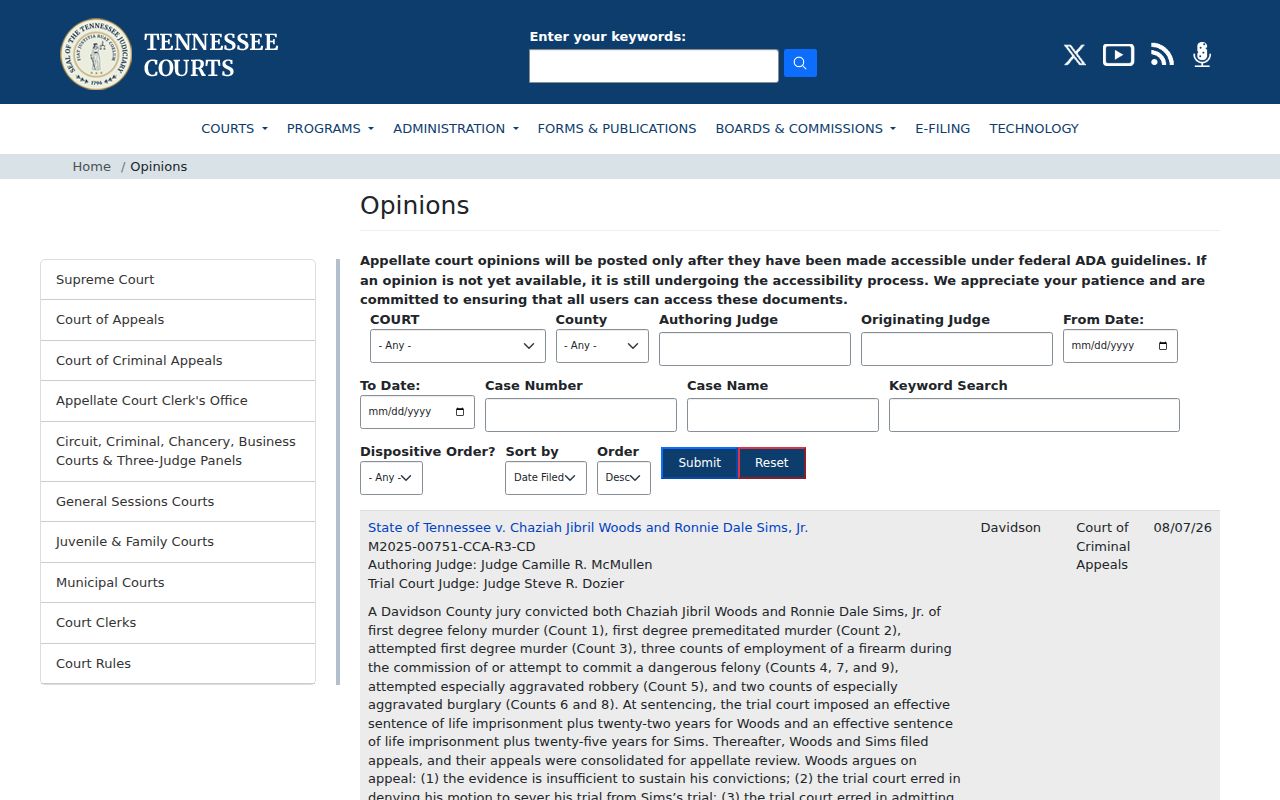
This Stewart County source can locate a free opinion PDF, but the Stewart County trial clerk remains the source for local costs, bond, the live docket, and named trial filings.
How a Criminal Case Moves
A felony usually begins in General Sessions and moves to Circuit only after the required preliminary and grand-jury steps. Stewart County's grand jury is impaneled on the first Monday in March, July, and November, and meets on the first Monday of January, March, May, July, September, and November. Those odd-month dates give a local frame for docket movement, but they are not a promise that a particular charge will advance on one set date.
Case flow: Charges Filed › Arraignment › Pretrial › Plea or Trial › Disposition › Sentencing
The prosecutor can revise the filed theory, and a grand jury can return a true bill or decline to indict. A booking charge may therefore differ from the ultimate Circuit count. Compare it with the initial custody entry through the Stewart County arrest lookup, then use the court file to confirm filed and disposed charges.
Stewart Cases in District 23
Stewart County is part of the five-county 23rd Judicial District with Cheatham, Dickson, Houston, and Humphreys counties. Circuit judges hold civil and criminal authority throughout the district. Joshua Turnbow joined the circuit in September 2024, so older local rules that name three divisions should not be treated as a current count of all judges.
The District Attorney General for District 23 serves Stewart County from offices in Charlotte, Waverly, and Ashland City; no Dover satellite is listed. The official district page gives that regional context.
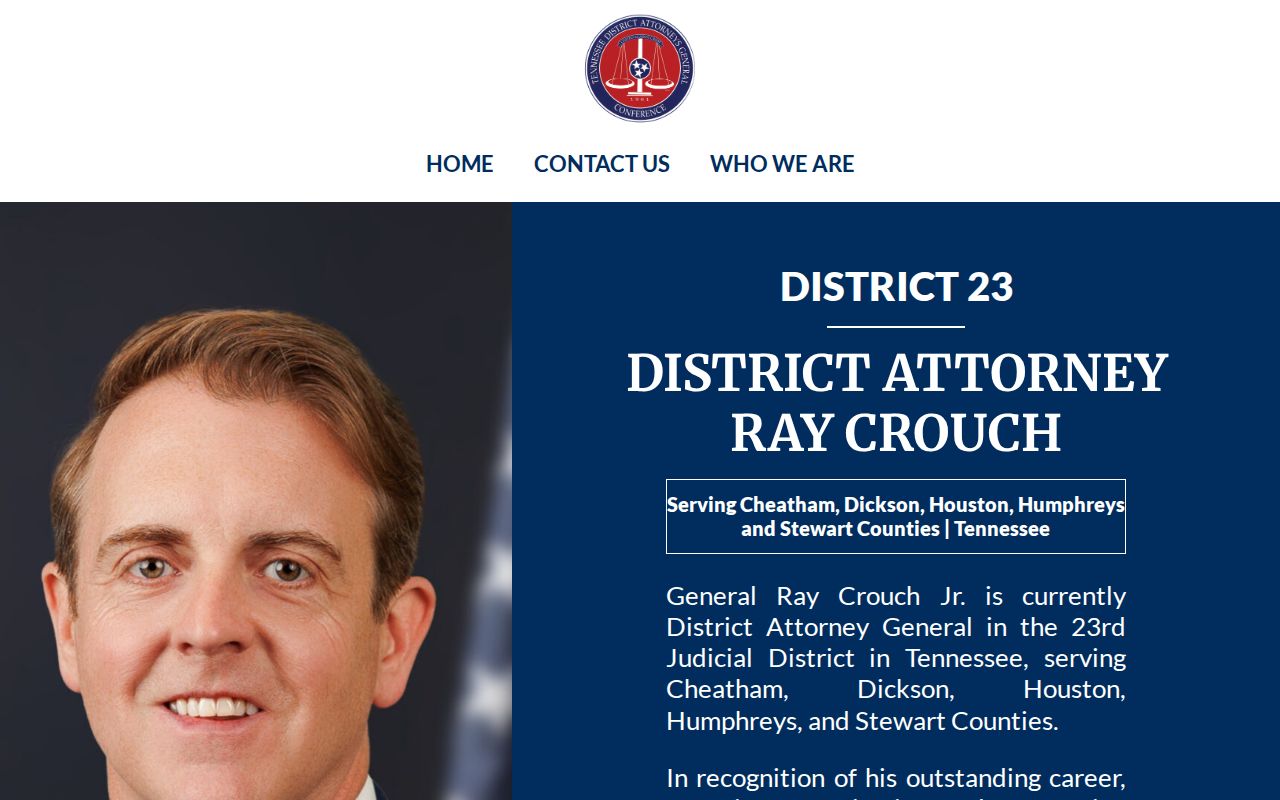
This district structure explains why a Stewart County prosecution can involve regional officials while the local court record remains with the Stewart clerk.
Note: District officials may work from another county, but Stewart County clerks still maintain the local trial docket and filed orders.
Requesting Stewart Criminal Case Copies
When online tools do not answer the question, use the county's department-by-department records custodian directory. A narrow request works best. Name the court, record type, date range, party, local docket number, and whether inspection or a copy is wanted. Ask for a cost estimate because Stewart's criminal clerks do not publish a current fee schedule.
Under the Tennessee Public Records Act, T.C.A. § 10-7-503, the Stewart County public-records request coordinator must produce the record, deny the request, or give the prescribed response about added time within seven business days. That is a response deadline, not a seven-day guarantee of final production. Inspection of open records is generally free. The office need not create a new summary or compile facts that do not already exist in a record.
Case Record Access & Restrictions
Tennessee Supreme Court Rule 34 presumes access to court records unless a statute, rule, court order, or judicial-function exception applies. Sealed material, protected records, judicial drafts and notes, deliberations, and internal case-management data can remain nonpublic. T.C.A. § 10-7-504 supplies further confidentiality rules, including protection for specified victim information.
Pending investigative material may also be restricted under Criminal Rule 16 while the case or related challenge remains active. Juvenile matters, except those transferred to adult court under the controlling law, are not ordinary public criminal case searches. A missing item can reflect sealing, redaction, a different custodian, or the fact that no appeal exists. It should not be treated as proof that no Stewart County criminal court case was filed.
Expungement under T.C.A. § 40-32-101 is also different from an access glitch. Qualifying relief requires a court order and can direct record deletion across the court, arresting agency, jail, TDOC, and TBI. Until the proper order is entered and distributed, a stale copy may remain outside the originating file. Keep a certified order when correcting a record that should have been removed.